Posts

Showing posts with the label photography

Adventures in Astrophotography Post-Processing

Image
 These days I do most of my blog-type posting on aus.social, a Mastodon instance. Sometimes though the limited formatting makes that a poor choice. This is one such case. Today I want to take you through the post-processing steps I go through to create a final astrophotographic artwork. And these are artworks, not scientific records. I could  use the same data to perform astrometric observations, but I don't. I like to create beautiful images. Knowing the things I am creating pictures of is part of creating that beauty, and that does require some scientific knowledge, but it is only a means to an end.  So, let's start with what comes out of my telescope. I use either a DwarfII or Dwarf3 smart telescope for my imaging, and what comes out of that is already pre-processed in a variety of ways. The telescope does its own stacking, and has a built-in link to a cloud post processor. So what I get is two images - one denoised and with basic image optimisations performed, and ano...

The Joy of a Thermal Printer Camera

Image
I do not often make gear recommendations to other photographers, but today I will, because it is not some great flash new bit of kit that will revolutionise your workflow. I am recommending it because it will revolutionise how you look at photography, and remind you of the very core of our art. So, if you are an even half-way skilled photographer, go out and get yourself a kiddies thermal printing camera. And a bunch of thermal printer rolls of paper. You'll set yourself back about AUD50 for enough supplies to print thousands of images. Don't bother getting a microSD card for it. That's not the point. The point is the immense freedom and creative challenges that working with a fixed aperture, fixed focus plastic lens that will then print out on a short-lived high-contrast paper will bring. And it is a freedom being so highly restricted. It is also freeing to be able to shoot with abandon, not worrying about any sort of post-processing, and not worrying about the cost of the...

A new Solargraphy project

Image
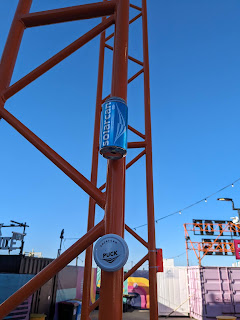
 This evening we visited the wonderful Rooftop Movies. Before the show, though, thanks to the organisers , we set up a dozen or so solargraph cameras around the cinema.  These are a mix of Solarcan Pucks, Solarcan Cans, and some homebrew can cams.  The plan is to recover half of them in a fortnight to check alignments and framing, and the rest on the last day. As a special treat to ourselves and the Rooftop Movies team, we brought one Puck in after just three hours. Here is the result.

Post processing in Astrophotography - comparing images

Image
 I am a novice when it comes to driving advanced post-processing tools like Siril , which, if you are getting into astrophotography, I highly recommend. It does have a steep learning curve, especially the post-stack processing side. Powerful, but not intuitive. But if you want quick results from your funky new smart telescope, you do have alternatives. So let's have a look at some solar photography and see what happens. Here is a untouched image, and the same image with some in-camera curve adjustment. The only edit is to crop the image. The Sun, unmodified With in-camera curve  adjustment Straight away, you can see more detail - the penumbras are clearer in sun spots, the granulation is more obvious.  Now let's look at what happens when you get heavy handed with Snapseed's structure and sharpening tools, adjusting the shadows and highlights a bit more, adding a touch of HDR and tweaking the colour balance. Heavily post processed in Snapseed First up, the granulation is v...

Hunting Neptune

Image
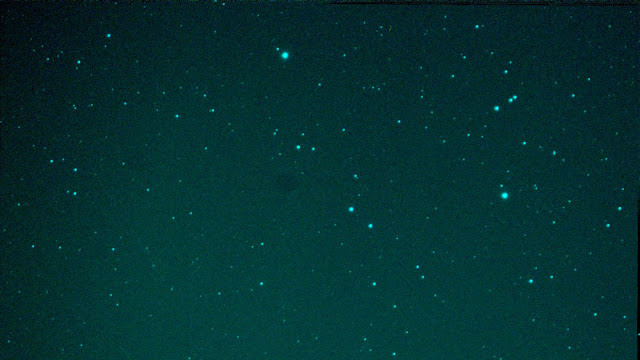
  Back in the day, and I mean starting around the turn of last century, you'd hunt for planets by taking photos through your telescope days or weeks apart, and then comparing the two plates.  Today I proved to myself that I have photographed Neptune from my front garden. This evening, I took this shot with my DwarfII - 10x15s exposures, stacked, and filtered to make everything cyan. In theory, somewhere in this image is Neptune. Good luck working out where. Cyan tinted star scape. Somewhere, Neptune is lurking. Last week, I did the same thing, but I tinted this one yellow. Yellow star scape. Neptune still hiding. Next, I composited them in Snapseed, and played with the opacity slider. Can you see Neptune now? Here are the two locations highlighted Neptune in two locations, circled Two very cool things about this. One, I did this with a telescope the size of a 1L UHT carton from my garden in the middle of suburbia! Two, it clearly shows how planets got their name - from the Gre...

The Leaning Tower of Gingin and the Sun

Image
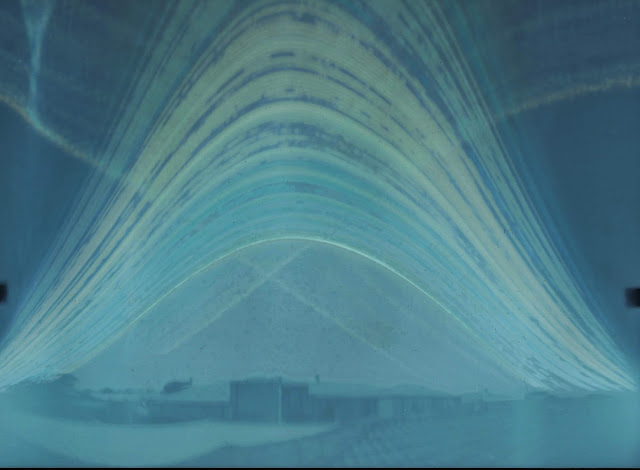
  A six-month solargraph taken at the Gingin Gravity Discovery Centre, looking North at the Leaning Tower. Many thanks to the GDC and AIGO for letting me set the cameras up back in December! Scanned using Google Photoscan, and post-processed in Snapseed.

Summing Up What Sort of Photography I Do!

Image
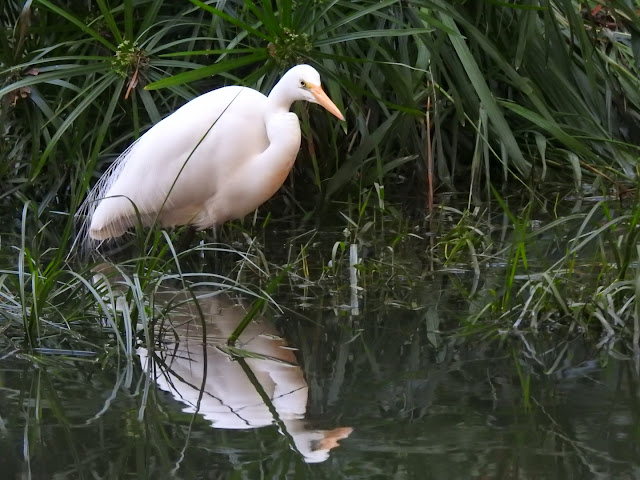
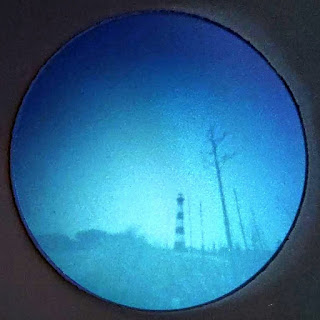
 Folks may have noticed that very little of my photography these days is "normal".  I do still take conventional photos with a fairly ordinary digital camera, but that is mostly my nature photography, and I do not often talk about that.  Great Egret - Herdsman Lake, June 2023. Nikon P900 I also do some astrophotography, up until recently using my mobile phone,  Milky Way, Pixel 6a, Guilderton, June 2022. but more recently with a Dwarf II 'smart telescope'.  Cat's Paw Nebula, Doubleview, June 2023, 98 x 15s frames, stacked in camera. These are not so much telescopes as dedicated astrophotography rigs controlled via a mobile app, and the results speak for themselves. They can align and stack multiple frames all by themselves, and compensate for significant levels of light pollution.  At the other extreme, I also experiment with in-camera cyanotype photography, using an 1830s era chemistry that is best known for making blueprints!  Mandurah Canal House, D...

Using a Solarcan Puck at lower lattitudes

Image
 The Solarcan Puck is a great little reusable solargraphy camera. It has a relatively wide aperture (f/90), so it can create  a decent image in a single day.  The limitation is that it has (for a camera of this type) a relatively narrow field of view - about 120 degrees.  This means that if you have it mounted vertically, you are going to be able to record angles up to 60 degrees above the horizon. This is fine if you are above about 50 degrees latitude. At about 50 degrees, the sun will never be higher than about 60 degrees above the horizon. Why that value? Probably because of where Solarcan are based:  in Scotland.  What do the the rest of the world have to do then? You can restrict yourself to winter months - but that is not much fun.  The other alternative is to angle your Puck upwards. But how far?  In the worst case, on the Equator, the sun will be directly overhead at Solstice. This means that the Puck will have to be angled upwards at lea...

In-camera Cyanotype exposure calculator

 Ilford/Harman do a wonderful little print-at-home dial calculator for pinhole cameras - but it also covers the range of f/ stops for more conventional cameras.  After some playing around, I have found that it can be adapted to cyanotype as well. 1/ On the ISO (middle) disk, locate the ISO .375 entry. Directly opposite it, write in "Cyanotype". 2/ On the Lighting/Shutter disk (the largest, bottom disk), write in "UV12" between the "->" and the full sun. Then "UV6" between the sun and the "19", and "UV3" between the 19 and the clouded sun.UV 15, for folks in places like Perth or Broome, roughly lines up with the ">" itself. That's it! At UV12, and f/1, an exposure time of 30 minutes is given as the result, which is just about spot on for a properly exposed image after washing. The same lens at UV6 gives a 1 hour exposure - which is correct, given the UV Level scale is linear.  Have fun!

Homebrew Solargraph Can Camera Refinement

 The classic beer can solargraph camera is easy to make - as you can see from Justin Quinnell's video . Justin's design is simple and safe for kiddies. Unlike this one , although it has the advantage of being significantly more waterproof. But what if there was a better way? A way to get near-complete waterproofing (except for the pinhole), and still have the build be kiddie-safe? Enter a construction and roofing repair product called Flashing Tape - this is heavy-duty tape with an aluminium backing - making it completely light-proof. The adhesive is thick and conformal, meaning that you can get a complete seal with it.  This means that you can use Justin's tin-opening method (which leaves no sharp edges), and still get a complete water-and-lightproof seal.  I use two strips of 50mm tape at right angles to ensure a complete seal, but you could also use a single strip of the 75mm tape.  The only down-side is that you will need to use a knife to cut the foil off when y...

From solargraph to cyanotype

Image
 I usually use cyanotype as an in-camera negative. This is a slow process - each exposure is a couple of hours at least.  I also shoot solargraphs. This is also a slow process, with exposures measured in days or months. Or even years.  As you all saw, a few days ago I brought in one of my six month solargraphs. The resulting image was dramatic enough, that I thought it would make a good cyanotype contact print. This is a very fast process by comparison. Exposure time in Perth in mid-summer is around 4-5 minutes.  Here is the result. I think I will do another print, this time on a tee-shirt!

6 month solargraph, rooftop, winter to summer.

Image
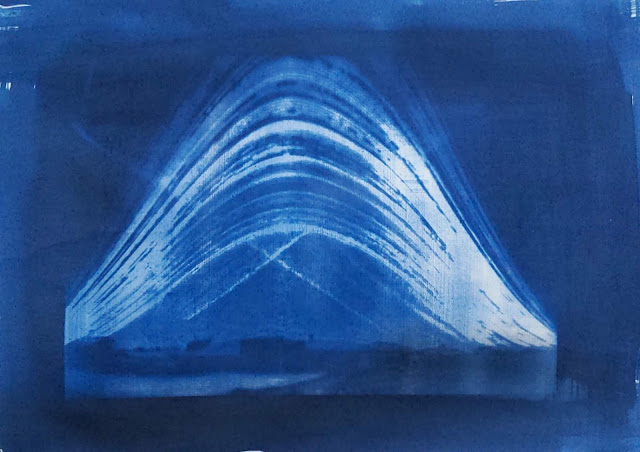
  Taken with a Solarcan Eldorado over six months, starting on the Winter Solstice, and ending on Christmas day. View is looking across our roof to the neighbours.  Scanned with an Epson multifunction scanner, and processed in Snapseed. It is interesting (to me) that the Solarcan cameras have the pinhole only 4cm from the top of the 16cm can (about 2cm below the shoulder). Despite this, the Summer solstice, and the preceding month, are all too high in the sky to be fit in frame. From this I figure I'd need a can nearly 30cm tall  (and still the same diameter) to capture the entire arc.  I have now reloaded the can with some Ilford Multigrade III that I dug up from the back shed (which I have tested, and is still usable for this purpose).

Late night thunderstorm

Image
We had a thunderstorm to the north (and west) of us last night, and I was lucky enough to catch a few of the strikes. Unfortunately, the bulk of the action was over 120km away. Even so, we got quite the show - and it demonstrates how far lightning is visible! This first shot, the strike was about 40km away, out to sea. Single strike to the West. 115mm, f/5, 30s, ISO100, Samsung NX1, processed in Snapseed. The strikes in this shot were approximately 120km away (according to the strike map). Composite of multiple strikes to the North, over the lights of Hillary's Boat Harbour, heavily cropped. 50mm, f/4.5, 30s, ISO100, Samsung NX1, processed in Snapseed. Sadly, the storm mostly collapsed after this, and we packed it in after another 20 minutes of no strikes. Naturally, as soon as we got home, we heard thunder.

Scarborough Beach Amphitheatre - Cyanograph vs digital

Image
Scarborough Beach Amphitheatre, 16:15, 45 minute exposure, 45mm f/1.2 VR lens on A7 paper. Processed in Snapseed. The same scene shot with a 20mm APS lens... Æ’/16 , 1/5s,  20 mm , ISO100 Samsung NX300 I find the cyanograph distinctly intriguing - if you are familiar with the scene, you can recognise most of  elements, but even without that familiarity there are some that can be identified. It is also interesting to note that the hessian sack curtain in front of the DJ is effectively invisible in UV!

This Experiment Failed

Image
(End credits, Excel Saga) Yes, today I have a very sad tale to share in my cyanography experiments. You remember last time, I shared this: Well, I have experimented further with inkjet photo paper, and made some very unpleasant discoveries along the way. The first is the streaking - without using a non-contact application method, I am not going to avoid it. The gel surface is just too fragile. So if I want to persist with this, it will be out with the air-brush. I somehow doubt I am going to find spray-cans of cyanotype sensitiser, after all.  The second is in washing. Because there is no cellulose for the Prussian Blue to bond with, the washing inevitably destroys the image, meaning that you cannot preserve the image long-term. This also means that you end up including the un-exposed chemicals in the scan, which adds considerable grain and loss of contrast - especially in the high-tones of the inverted image.  This second issue is essentially insoluble, which is a pity, as i...

Scarborough Beach twilight markets, March 25, 2021

Image
We usually head down to Scarborough Beach for the twilight markets that are held every Thursday during the warmer part of the year. There is a dizzying array of food trucks and various DJs and live performances to keep the crowds entertained.  "Wait. Crowds?" I hear you ask? Yes, crowds . Although the shots below don't really show it. Here in W.A, we've been making the most of our isolation from the rest of the country, and have managed to avoid any significant outbreaks after the initial surge. So far, anyway. We had one potential outbreak a couple of months back, and so we immediately went into a two-week lockdown, which everyone agreed was a great move if it meant that we could avoid a full outbreak. This is all a long way of saying that we are operating in an effectively pre-COVID state (contact tracking logs notwithstanding), aside from interstate/international travel. So things like public festivals are very much taking place as often as we can manage them. All ...

More adventures in cyanography

Image
I continue to play with in-camera cyanotype imaging. My latest experiments have involved using inkjet photo paper as a substrate, and in particular in using it as a cyanotype film roll in a medium format TLR. The results have been rather pleasing.  GoSun Fusion. f2.8 90 minutes. SooC. GoSun Fusion. F2.8 90 minutes post-processed. This first one shows just how much detail you can get out of the process - and also the hazards of using a brush to apply the solution to a high-gloss paper. Nevertheless, I think the result is rather effective, and reinforces the juxtaposition of the very old technique with the ultra-modern subject. Garden, SooC f2.8 90 minutes Garden, post-processed. F2.8 90 minutes. In this case the brush streaks are even more obvious, as are a number of blemishes in the coating. When coating non-gelled surfaces, a bush is OK, and a glass spreading rod even better, but neither work particularly well with a high-gloss gel paper. That said, again, the result is intriguing...

Photography Scavenger Hunt Round 30 Results

Image
 So Round 30 of the Photography Scavenger Hunt is over, the judges have had their say, and the photos have been revealed. I did surprisingly well, with a couple of placings and a few HMs. So, have a look at everyone's wonderful work, especially our winner, Eric Raeber, and think about signing up for the next one, which will kick off in a few weeks. https://scavengerhunt.photography/round-30/ A collage of my entries

Another thing I have learnt while shooting cyanotype.

Image
 Here is a scene I shot this afternoon: Here is the same scene as a cyanotype (reflected, unwashed, and still a negative): One thing really stands out for me - and that is how little the grass reflects UV. Here is a crop of the two images overlaid and scaled. There are some inconsistencies, due to the differing characteristics of the lenses, but you can see how little the unshaded grass is exposed. And the shaded grass is almost completely unexposed.  And, indeed, checking the research, I find that one of the lowest natural UV albedos is from grass, at 0.02. ( https://www.tandfonline.com/doi/pdf/10.3846/1648-6897.2008.16.83-88 ) So my little hypothesis appears to have been borne out by independent research, and a source of other information about things I cannot see when taking the cyanographs, which will help me plan future exposures.